Medical Device Registration in Bangladesh | OpenMed Solutions
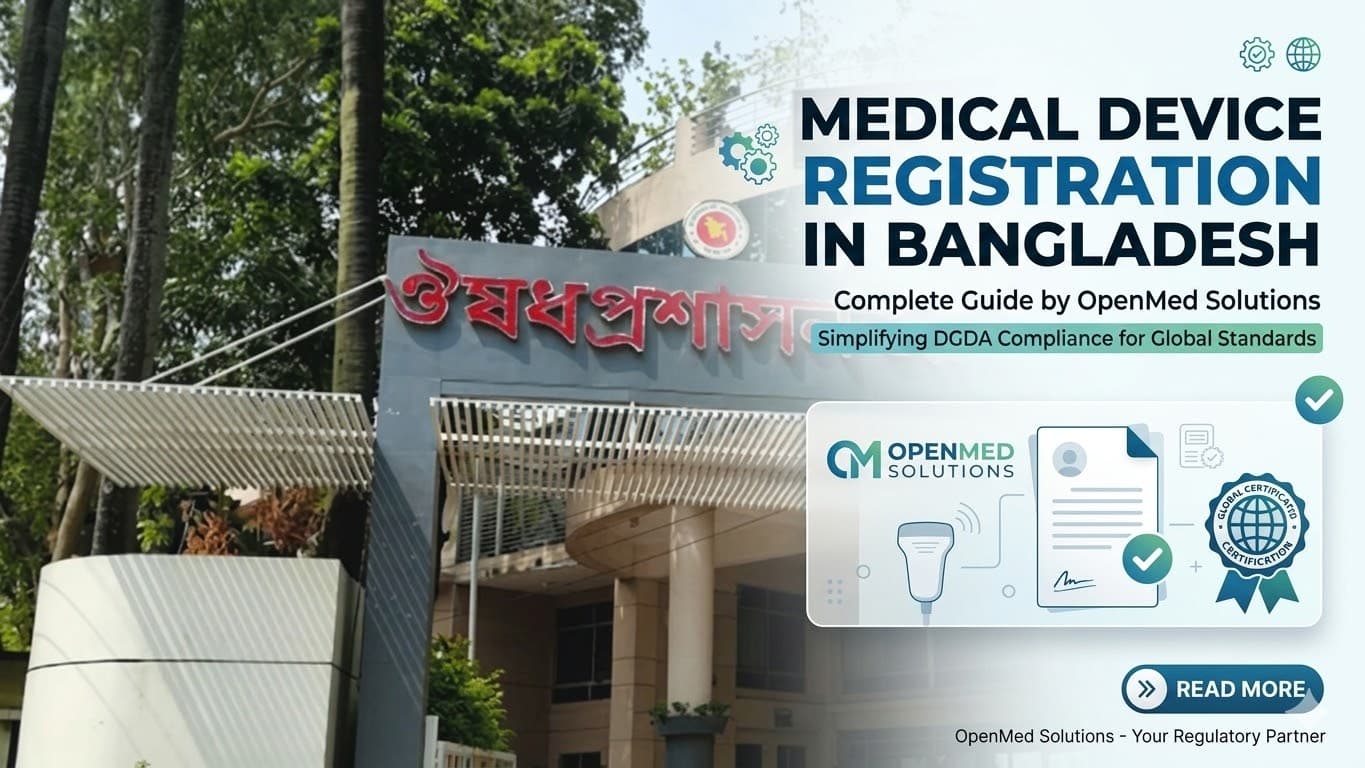
Medical Device Registration in Bangladesh | OpenMed Solutions
Medical devices play a critical role in modern healthcare. From basic diagnostic tools to advanced life-saving equipment, these technologies help doctors diagnose diseases, monitor patients, and deliver effective treatment. But before any medical device can be used in hospitals or clinics, it must meet strict safety and quality standards. This is why medical device registration is essential in Bangladesh. However, navigating the regulatory system is not always easy. The process involves understanding complex regulations, preparing technical documentation, and coordinating with government authorities.
This is where OpenMed Solutions comes in.
At OpenMed Solutions, we provide professional regulatory support to help medical device manufacturers and importers successfully register their products in Bangladesh. Our experienced team simplifies the process, ensures compliance, and helps businesses enter the market efficiently.
Why Medical Device Registration Matters
Unregistered medical devices can pose serious risks to patient safety. If devices do not meet regulatory standards, they may lead to inaccurate diagnosis or ineffective treatment. Proper registration ensures that only safe, reliable, and high-quality devices are available in the healthcare system.
It also builds trust among doctors, hospitals, and patients. Bangladesh’s medical device market is expanding rapidly. According to the Bangladesh Investment Development Authority (BIDA), the market size was approximately 442 million US dollars in 2020 and is projected to reach around 820 million US dollars by 2025, growing at a 13 percent annual rate. This growth creates significant opportunities for international manufacturers and local distributors. However, entering this market requires full regulatory compliance. Without proper registration, companies may face legal penalties, product confiscation, or restrictions on market entry.
Regulatory Authority for Medical Devices in Bangladesh
The Directorate General of Drug Administration (DGDA) regulates medical devices in Bangladesh.
The DGDA operates under the Ministry of Health and Family Welfare and is responsible for ensuring that all medical devices meet safety and quality requirements before they can be marketed. The regulatory framework is governed by the Drug and Cosmetics Act 2023, which formally defines the requirements for medical devices and diagnostic equipment in the country. According to this regulation, medical devices must obtain a Marketing Authorization Certificate from the DGDA before they can be legally sold in Bangladesh. To align with international standards, Bangladesh also requires manufacturers of Class B, C, and D devices to demonstrate a certified Quality Management System, commonly through ISO 13485 certification.
Medical Device Classification in Bangladesh
Medical devices in Bangladesh are categorized according to their risk level, similar to international regulatory systems.
There are four main classes.
- Class A devices are considered low risk, such as tongue depressors and surgical retractors.
- Class B devices carry low to moderate risk, including suction equipment and hypodermic needles.
- Class C devices fall under moderate to high risk, such as bone fixation plates and lung ventilators.
- Class D devices represent the highest risk category, including implantable defibrillators and artificial heart valves.
Registration Fees and Certificate Validity
- The Directorate General of Drug Administration has defined specific registration fees.
- For Class A devices, there are no government registration fees.
- For Class B, C, and D devices, the government fee is approximately BDT 63,250 per product.
- When renewal is required, the cost is around BDT 11,500 per product.
- The registration certificate for Class B, C, and D devices is valid for five years, after which renewal is required.
Documents Required for Medical Device Registration
To register a medical device in Bangladesh, manufacturers and importers must submit several important documents.
These typically include:
- A legal agreement between the manufacturer and the authorized local agent or distributor.
- A manufacturer's authorization letter.
- The product must have a CE certification or an equivalent regulatory approval.
- A free sale certificate from the country of manufacture, attested by the Bangladesh Embassy.
- For Class C and Class D devices, an additional Free Sale Certificate from recognized countries such as the USA, Germany, Japan, Australia, Switzerland, or the UK may also be required.
- Manufacturers must also provide product recall history for the last two years and a list of countries where the device is currently being marketed.
- Packaging materials such as labels, boxes, and instruction manuals must clearly mention the brand name, manufacturer, country of origin, manufacturing date, expiry date, and batch number.
- Product catalogs and technical documentation are also required as part of the submission.
Why Work with a Regulatory Expert
- Handling the registration process independently can be complicated and time-consuming.
- Regulatory service providers help simplify this process by ensuring that documentation is accurate and fully compliant with DGDA requirements.
- Working with experienced professionals helps avoid costly mistakes, reduces delays, and speeds up the approval process.
- It also allows manufacturers to focus on their core business activities while experts manage the regulatory process.
OpenMed Solutions’ Registration Process
At OpenMed Solutions, we follow a structured and transparent process to ensure smooth medical device registration.
The first step is an initial consultation and regulatory assessment. Our team evaluates your device classification, documentation requirements, and regulatory pathway.
The next step is document preparation, where we assist in organizing technical files, regulatory certificates, and application forms.
Before submission, we conduct a comprehensive compliance review to ensure that the application meets DGDA requirements.
Once submitted, we coordinate with the DGDA authority, responding to queries and providing any additional documentation required.
Even after approval, we provide post-registration support, including regulatory updates, certificate renewal assistance, and compliance monitoring.
How OpenMed Solutions Supports Your Business
At OpenMed Solutions, we do more than just submit applications.
- We provide end-to-end regulatory support tailored to your business needs.
- Our goal is to simplify the entire registration process so that manufacturers and importers can focus on expanding their operations.
- We also develop customized regulatory strategies based on your device category and market goals.
- Our long-term support ensures that your products remain compliant with both local and international regulatory standards.
The medical device market in Bangladesh is growing rapidly, offering exciting opportunities for manufacturers and distributors. But regulatory compliance is essential for entering and succeeding in this market. With OpenMed Solutions, medical device registration becomes a smooth and structured process. Our experienced regulatory team handles the complexities so you can focus on innovation, product development, and business growth.
If you are planning to introduce medical devices into the Bangladesh market, OpenMed Solutions is ready to support your journey. Contact us today and let us help you bring safe and compliant medical devices to the healthcare industry.